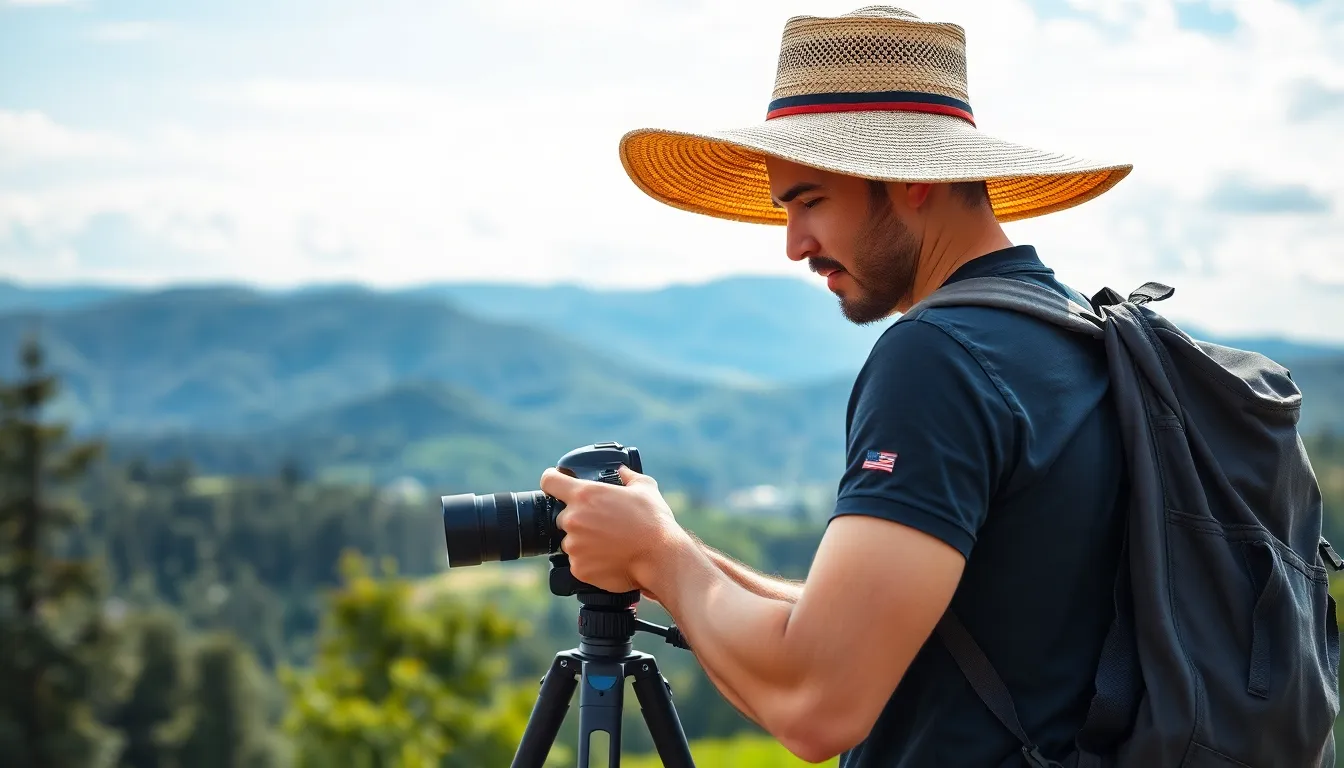
Traveling is an adventure, but capturing those moments? That’s a whole different journey. Whether it’s that jaw-dropping sunset or a candid shot of a local street vendor, great travel photography can turn your vacation snaps into awe-inspiring memories. But let’s face it—nobody wants to come back from a trip with a camera roll full of blurry selfies and awkward angles.
Travel Photography Tips
Capturing stunning travel photos requires preparation and insight. Implementing effective strategies enhances the quality of images taken while traveling.
Plan Your Shots in Advance
Planning shots increases the likelihood of capturing memorable images. Identify key locations and moments to photograph, such as iconic landmarks and vibrant street scenes. List specific times for optimal lighting, like during golden hour, when the sunlight softens and highlights subjects effectively. Visualize compositions beforehand to streamline the process during excursions. By mapping out potential angles, photographers can avoid missed opportunities and focus on creativity.
Research Your Destination
Research enhances the overall travel photography experience. Knowing local customs, culture, and notable attractions provides context and deepens appreciation for subjects. Explore photography resources or social media platforms to find inspiration and understand unique perspectives from fellow photographers. Familiarizing oneself with safety guidelines and legal regulations about photography in certain locations also proves beneficial. Engaging in this preparation fosters an environment conducive to capturing evocative images that tell a story.
Camera Gear for Travel Photography
Selecting the right camera gear simplifies capturing stunning travel moments. Each photographer’s needs vary, but certain essentials stand out.
Best Cameras for Travelers
DSLRs and mirrorless cameras offer versatility and image quality. These cameras often support interchangeable lenses, allowing photographers to adapt to different environments. Compact cameras provide lightweight options without sacrificing quality. Many travel photographers choose high-end point-and-shoot models for their portability. Smartphones remain popular due to their convenience and advanced camera features. Some travel enthusiasts invest in drones for unique aerial perspectives.
Must-Have Accessories
Tripods stabilize shots, ensuring clarity in dynamic settings. Lens filters protect against glare and enhance color representation. Extra batteries keep cameras operational during long days of exploration. Memory cards with high storage capacities accommodate numerous shots. A camera bag safeguards equipment from damage while providing easy transport. Cleaning kits maintain lens quality, ensuring optimal image clarity throughout the trip.
Techniques for Stunning Travel Images
Capturing stunning travel images involves specific techniques that enhance the overall quality of photos. Mastering these techniques transforms ordinary shots into extraordinary memories.
Composition Basics
Composition is crucial for creating engaging travel photographs. Apply the rule of thirds by dividing the frame into a grid and placing focal points along the lines or intersections. Use leading lines to draw viewers’ eyes toward the main subject, such as roads or rivers. Incorporate foreground elements to add depth to images, enhancing interest. Experiment with different perspectives by shooting from various angles, such as low or high vantage points. Understanding leading and trailing elements in a scene helps create dynamic compositions that captivate viewers.
Mastering Natural Light
Natural light dramatically influences the quality of travel photos. Golden hour, shortly after sunrise or before sunset, provides warm, soft lighting that flatters subjects. Overcast days offer diffused light, ideal for minimizing harsh shadows and enhancing colors. Position subjects with the light behind to create silhouettes or ensure even exposure. Use reflectors, like white boards, to bounce light and illuminate darker areas. Observe how light changes throughout the day to optimize shooting times for stunning images.
Post-Processing Tips for Travel Photos
Post-processing plays a crucial role in elevating travel photos from ordinary to extraordinary. Adjusting images enhances their impact and allows photographers to showcase their experiences vividly.
Editing Software Recommendations
Lightroom excels in photo editing, offering powerful tools that simplify adjustments. Photoshop allows for detailed edits, enabling extensive modifications and creative effects. For mobile editing, Snapseed provides convenient features for on-the-go adjustments. Capture One delivers professional-grade results with advanced color grading and tethering options. These programs offer something for every level, ensuring photographers can find the right fit for their needs.
Enhancing Your Images
Adjusting brightness improves exposure and makes images pop. Increasing contrast highlights details, adding depth to vibrant scenes. Cropping focuses attention on subjects, eliminating distractions from the periphery. Color correction enhances hues, bringing the vibrancy of landscapes to life. Sharpening images brings clarity, emphasizing textures and fine details. Each enhancement, when performed carefully, transforms vacation photos into striking memories.
Conclusion
Travel photography is more than just snapping pictures; it’s about telling a story and preserving memories. By applying the tips discussed, photographers can elevate their skills and capture stunning images that resonate with viewers.
Preparation is key in selecting the right gear and planning shots that utilize natural light effectively. Experimenting with composition and various perspectives adds depth to each photograph.
Post-processing also plays a vital role in enhancing the final image. With the right techniques and tools, ordinary vacation snapshots can be transformed into extraordinary visual narratives. Embracing these strategies will ensure that every travel adventure is documented beautifully and meaningfully.